
Survival, Voice, and the Language of Brutality
The Painted BirdThis thread follows the boy’s changing means of surviving a violent world, from imaginative interpretation and bodily endurance to enforced silence and the eventual return of speech.
increasing Bearing strength in each event
 decreasing
Bearing strength in each eventdecreasingA Child’s Imagined Nature
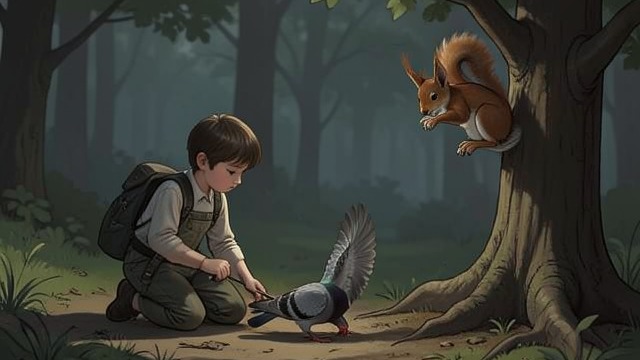
Imagination as First Shelter
Animals as Companions
The boy remembers the picture-book stories of his childhood and imagines the farmyard animals as social beings with their own relationships and conversations. In Marta’s yard, this makes an unfamiliar place feel less empty.
A pigeon’s rejection by the hens and the squirrel’s daily visits become events the boy can interpret through stories and companionship. His imagination does not prevent cruelty, but it lets him form attachments beyond the household that has taken him in.
Loss Beyond Explanation
When village boys burn the squirrel, the boy loses a friend who had given his mornings purpose. Marta’s prayers and protective enchantments cannot undo the killing or explain it in a way that satisfies the child.
The episode establishes a tension that persists through the book: imaginative meaning can help the boy endure, yet it cannot shield other beings from violence. His storytelling begins as comfort and becomes a way to preserve the emotional reality of what he has witnessed.
A Body Turned into a Bird
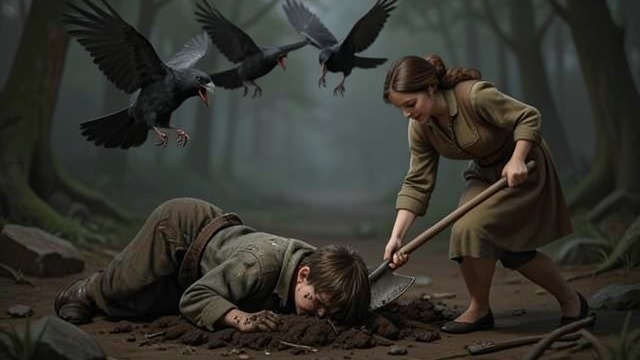
Survival Through Transformation
Buried Against Illness
When the boy falls sick during the plague, Olga buries him up to his neck in cold earth. Fever and exhaustion blur his sense of his body and surroundings, while ravens gather and peck at his head.
At the height of his terror, he imagines himself becoming a bird and flying with the flock. The vision transforms the experience of helpless confinement into an imagined escape.
Survival Without Certainty
Olga digs him out, and his health returns. She explains the recovery through her belief that cold earth drove out disease and that the ravens recognized him as one of their own.
The episode leaves open what the boy’s vision means: a fevered escape, a child’s imaginative defense, or something he cannot explain. What matters is the way his mind reaches for transformation when his body is trapped between sickness, earth, and birds.
Loss of the Voice
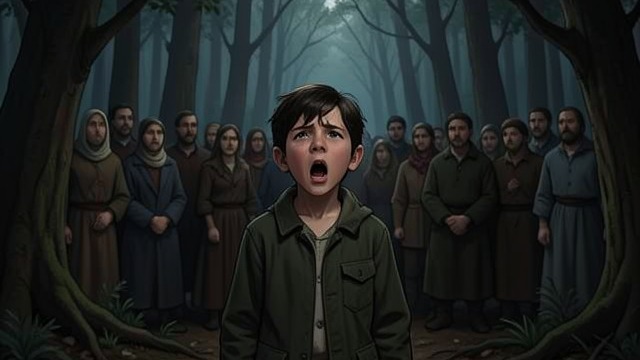
Silence After Public Humiliation
A Failed Entrance into Community
The boy hopes that assisting at Mass will mark his acceptance into a protected religious community. Instead, his mistake with the Missal prompts the congregation to call him a vampire and throw him into a manure pit.
He escapes the pit, but when he tries to cry out in the forest, no sound comes. His loss of speech arrives after a scene in which the crowd has decided what he is without listening to him.
Voice as More Than Sound
The boy imagines his last cry wandering through the church, unable to find a way out. That image gives his silence a strange movement: speech has not simply vanished, but seems displaced from the person who uttered it.
He also doubts that the loss is punishment from God. The crisis unsettles both his understanding of speech and his belief that anyone can appeal to a reliable power above human cruelty.
Silence as Company
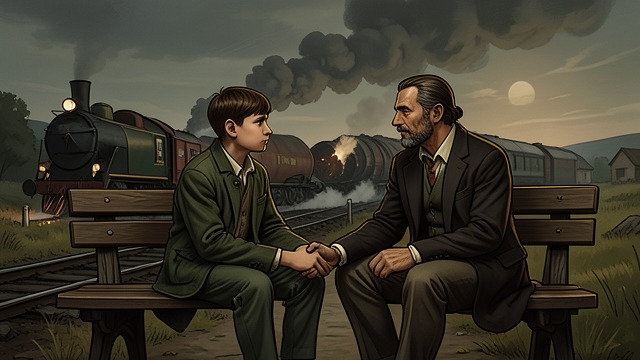
Two Kinds of Silence
The Silent One’s Choice
At the Children’s home, the boy meets the Silent One, who can speak but has decided that there is no point in doing so. The boy fears that their closeness will make others believe his own muteness is also a choice.
Their friendship grows through written notes, signs, and shared action. The Silent One helps protect the boy, and the boy in turn joins him in conflicts and excursions beyond the institution.
Communication Without Explanation
Their bond demonstrates that silence can be chosen, imposed, or misunderstood. Neither boy needs fluent speech to establish trust, although their actions can carry consequences they do not fully control.
When the Silent One derails a train in retaliation for the boy’s market beating, their shared silence cannot settle what the act means. The episode shows both the intimacy and the danger of communicating through action alone.
Speech Found Again
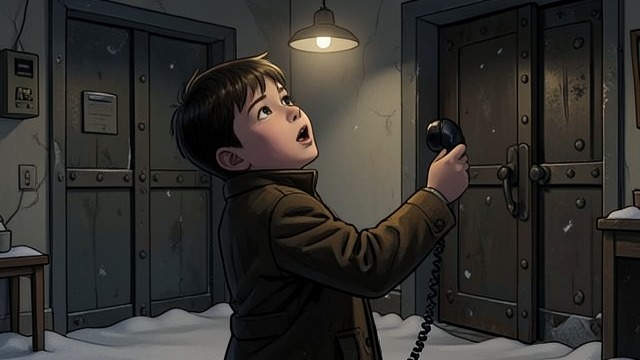
A Voice Returns
The Long Interruption
The boy’s muteness shapes his life after the church incident, separating him from people who mistake silence for stupidity or concealment. He adapts through signs, writing, observation, and the careful reading of other people’s behavior.
Even with the soldiers, who offer care and instruction, he cannot simply choose to speak. The voice he lost remains an absence around which his relationships and self-understanding have formed.
Sound Re-enters the Room
After a skiing accident and a long recovery, a ringing telephone prompts him to try speaking. Sounds emerge, and he begins reciting words and fragments of songs, discovering that his voice has returned.
The recovery does not erase the experiences that made silence part of his life. It closes the novel with speech reclaimed as a physical capacity and an emotional astonishment: the voice once imagined wandering through a church is again present in the boy’s own body.
During the boy’s first months with Marta
During the plague at Olga the Wise One’s village
Immediately after the Corpus Christi Mass
During the boy’s years at the Children’s home
In April after the skiing accident
